After waking up and nearly knocking myself out on a shelf in the room, I had the breakfast of champions…toast! Following breakfast, I took an incredibly hard walk up to Mehrangarh: hard because of the heat, which didn’t show any signs of giving in.
I only walked for about ten minutes, but those ten minutes were agonising, sticky and hot.
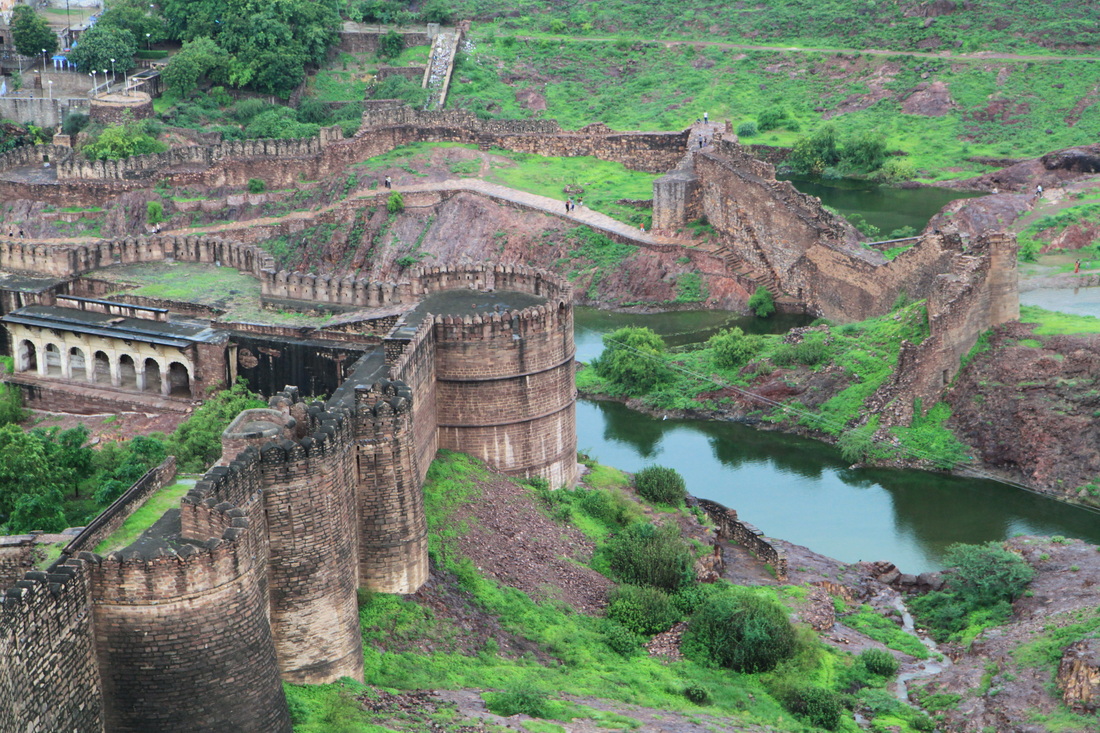
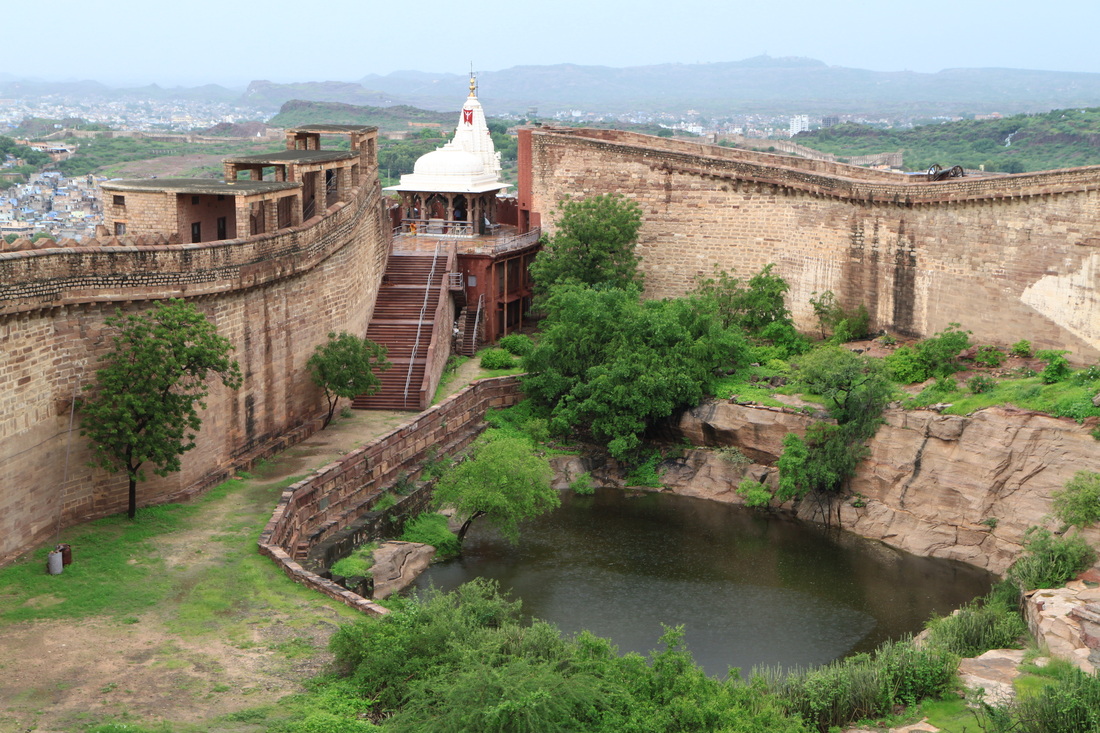
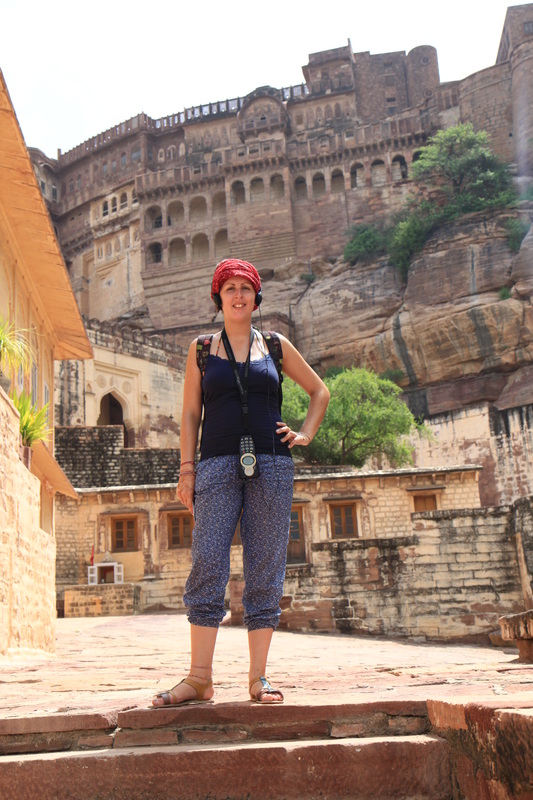
Mehrangarh is chiselled from the rocks on which it stands, making it quite literally rise from the hillside. The battlements are between 6m and 36m, depending on where you stand and the whole place is full of history and legend. The first part of the fort was created by Rathore leader Rao Jodha in 1459, around which grew his city: Jodhpur. The site lay on the vital trade route between Delhi and Gujarat, so was destined for greatness from the start. The Rathore kingdom grew quickly on the profits of Opium, Sandalwood, Dates and Copper and the area in which it controlled became known as Mawar (the Land of Death) because of the harshness of the land.
Once inside the Fort Complex, I bought a ticket for the museum, which meant that I could go inside the actual fort. With the tickets you also get an audio guide that you listen to at various stages of the tour and around the buildings. I found that the audio tour was very informative, as otherwise you’re just looking at random rooms and random snippets of information that maybe make sense.

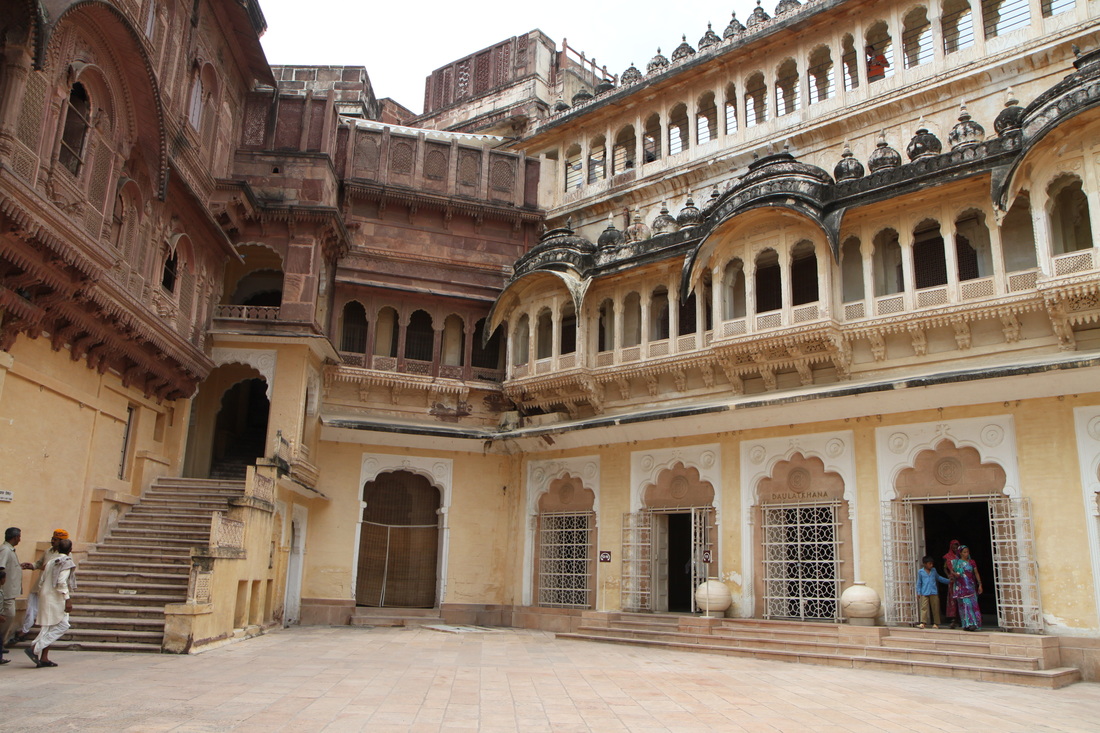



Today I learnt that there were secret balconies in the Maharajahs meeting room (Moti Mahal) where the wives would sit, hidden, so that they could listen in on the conversations between the ruler and his emissaries. Apparently this was good as it gave the Maharajah an extra few sets of ears listening in on his meetings…scandalous!
The main gate is set at a 90° angle to the path on which you approach from, meaning that any enemy elephants would not have a lot of time to build up sufficient momentum with which to ram the gates with. They were also fitted with scary looking spikes with which to deter Elephants from battering them down.
Another interesting sight as you come into the fort is the Sati marks of the royal widows. When the Maharajah Man Singh died in 1843 his widows dipped their hands in Vermillion and pressed them onto the walls as they left the fort for the last time, as they reached his funeral pyre they would then place themselves upon it and, in silence, follow their husband into death. This was the last time that this process occurred in Jodhpur.
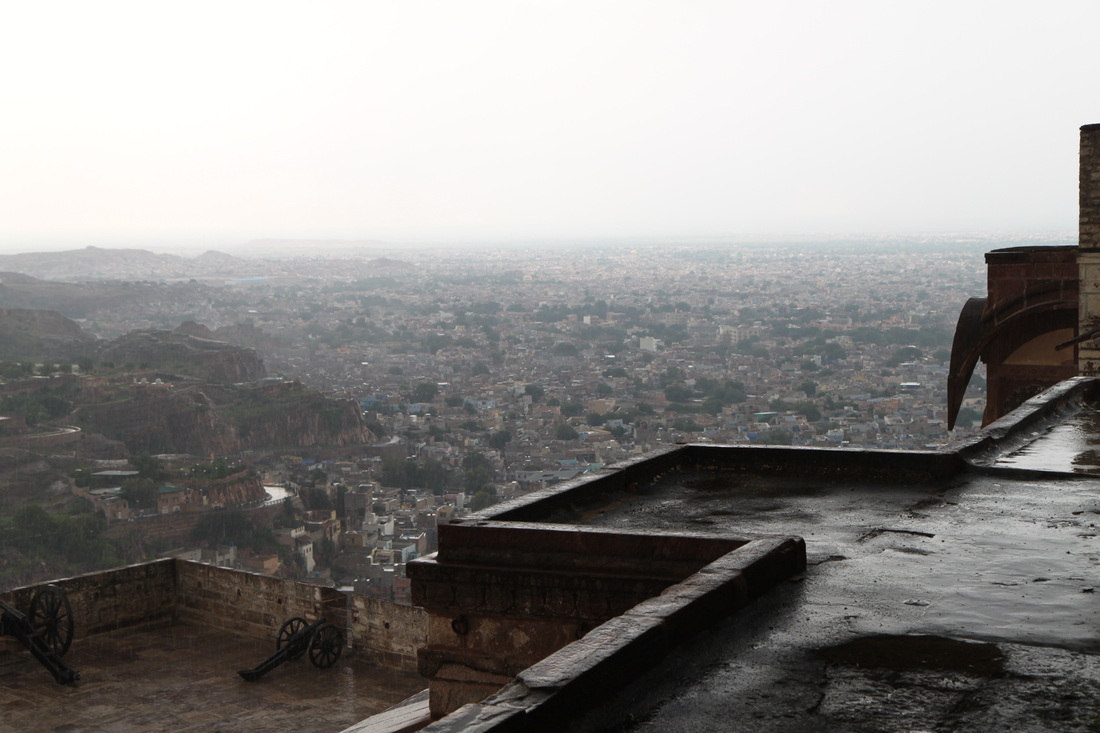
As I was walking around the museum, suddenly the heavens opened and all views from the fort and over the ramparts were obscured by what looked like mist covering the city. This lasted for a good twenty minutes, by which time the inside stairwell of the museum/fort was flowing wildly with a river of rainwater. It was quite exciting to watch…again it looked like Jumanji (the bit where the inside of the house explodes with a river…but I was lucky enough to miss out on the crocodiles).
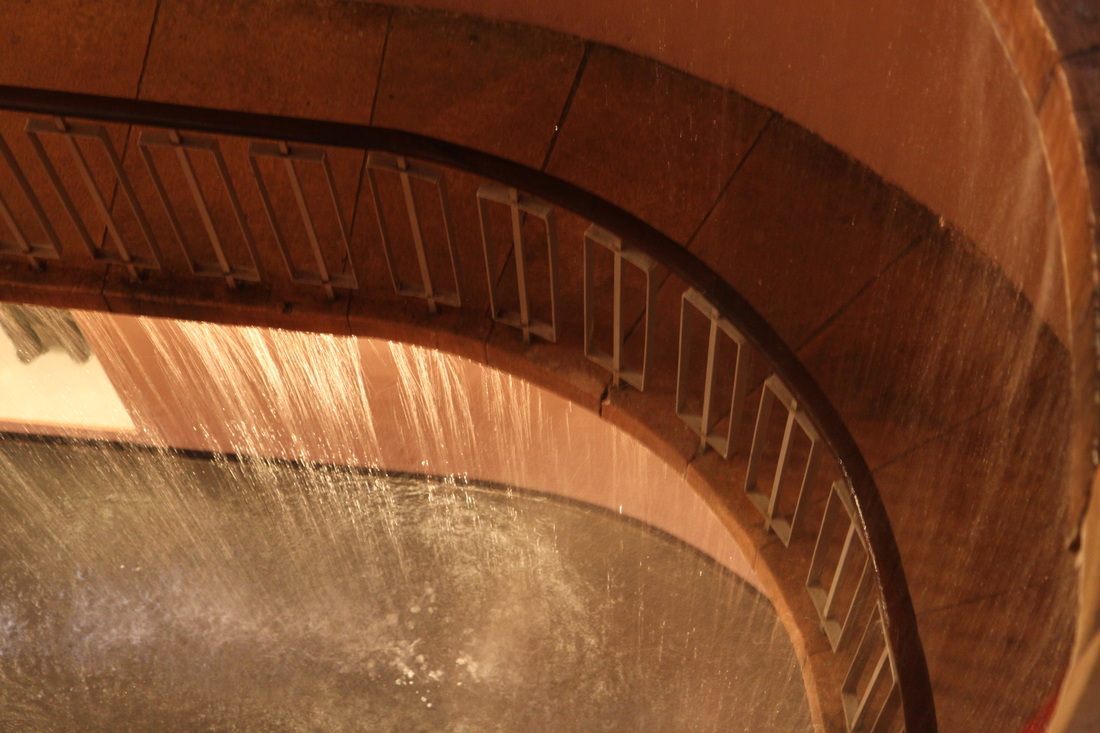
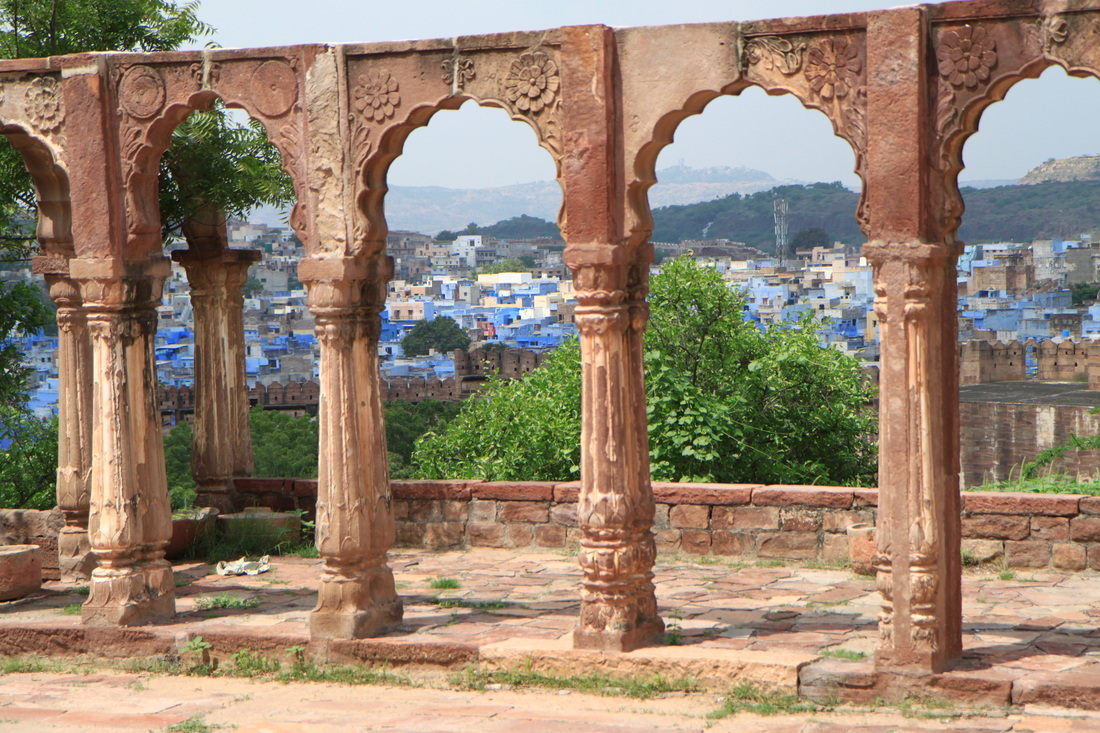
I love the way that all the buildings are sort of inside and out. You’re inside the building but it’s a courtyard with no roof or the room has archways but no doors, it’s great in the hot weather and means that the rooms can air.
After the rain had eased off and the sky back to its normal hue the amble was continued. Some of the rooms held quite interesting items, for example, one of the rooms was full of the Maharajahs weaponry, which consisted of swords, daggers, armour, guns and spears. It was really interesting to see the actual pieces that would have been used and to hear about how they were used.
The curved sword of the Mughal Emperor Akbar was on show. There was one dagger that would be plunged into the victim and then a special trigger within the handle would be released and then the blade would open, like a scissor action, to reveal another blade within. This piece of weaponry would literally slice the person open! Unfortunately I didn’t get a good photo of the actual dagger.
There were also rooms with the Royal Palanquins on show (a boxlike enclosure carried on poles by bearers that the important people would sit in) and a room full of the royal cradles. My favourite room was the Maharajas bedchamber; it was decorated around the time that the British came to India and features some lovely baubles on the ceiling!

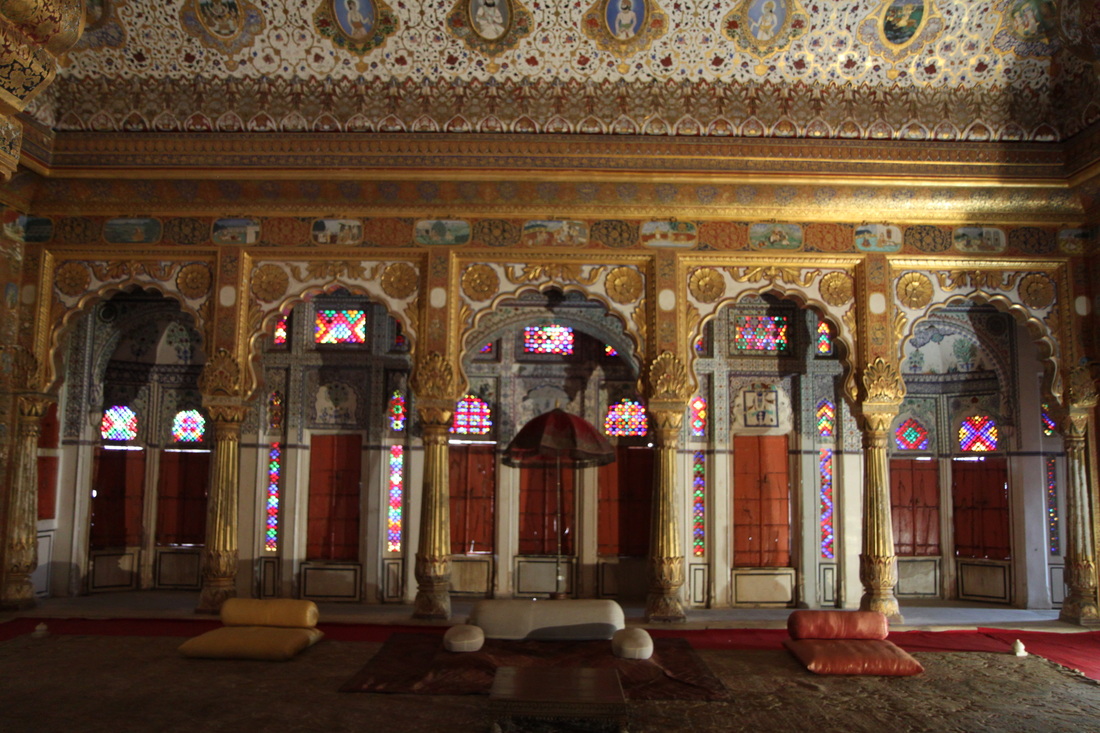

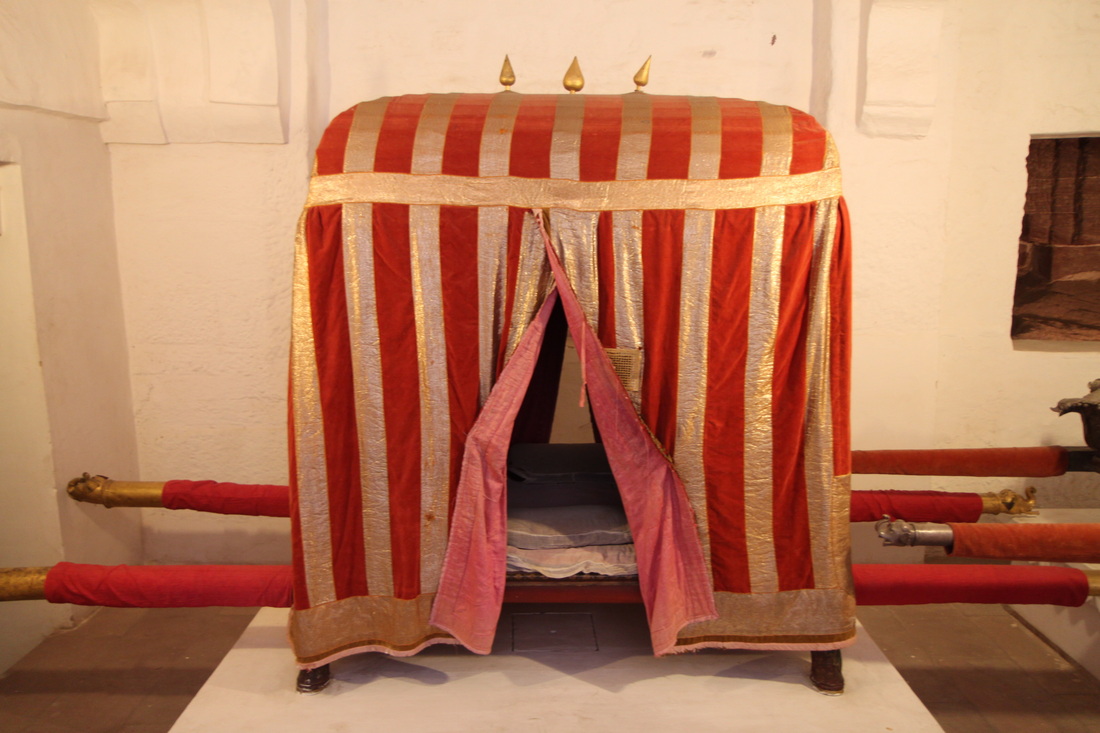

 Powered By Fondant Fancy