The War Remnants Museum is a war museum in the centre of Ho Chi Minh City containing exhibits relating to the Vietnam/American War…it’s interesting to notice that it is referred to as a different name depending on who you speak to, the Vietnamese call it the American War, whereas I have only ever heard it called the Vietnam War before.
Arriving at the museum to find that it was closed for lunch, I opted for a coffee break in a nearby cafe, ordering what I hoped was a coffee…the lady in the cafe just seemed to smile and nod when I spoke. The coffee was lovely and I drank it to a random compilation of K-Pop and American Pop songs. Having Justin Beiber followed by an undecipherable Korean band was slightly odd, but fun. Once finished in the cute little cafe, I ventured over to the Museum, the tickets were 15,000 Dong which works out at 50 pence per person. I thought that this was quite a bargain as what can you get for 50 pence normally?
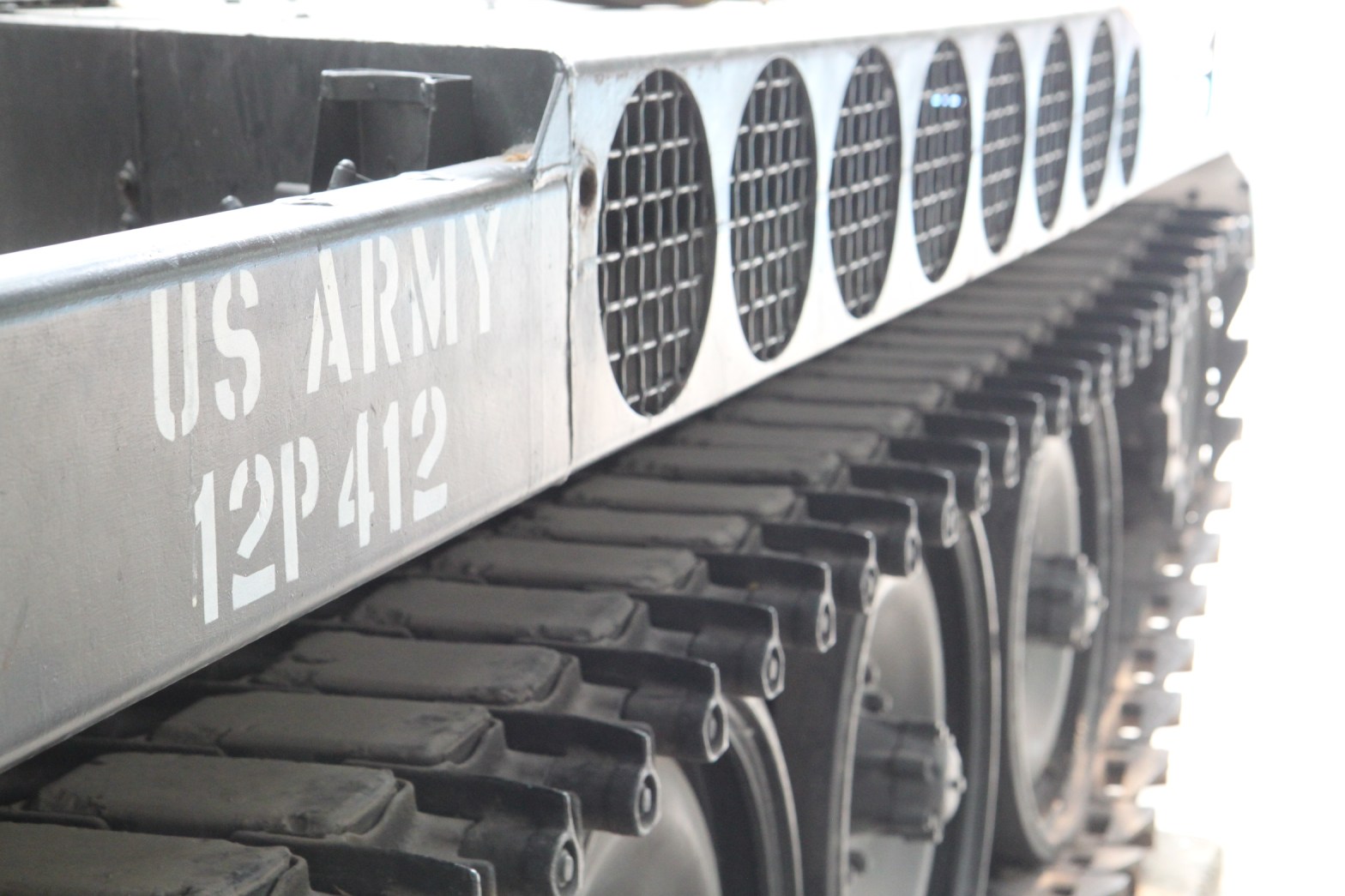
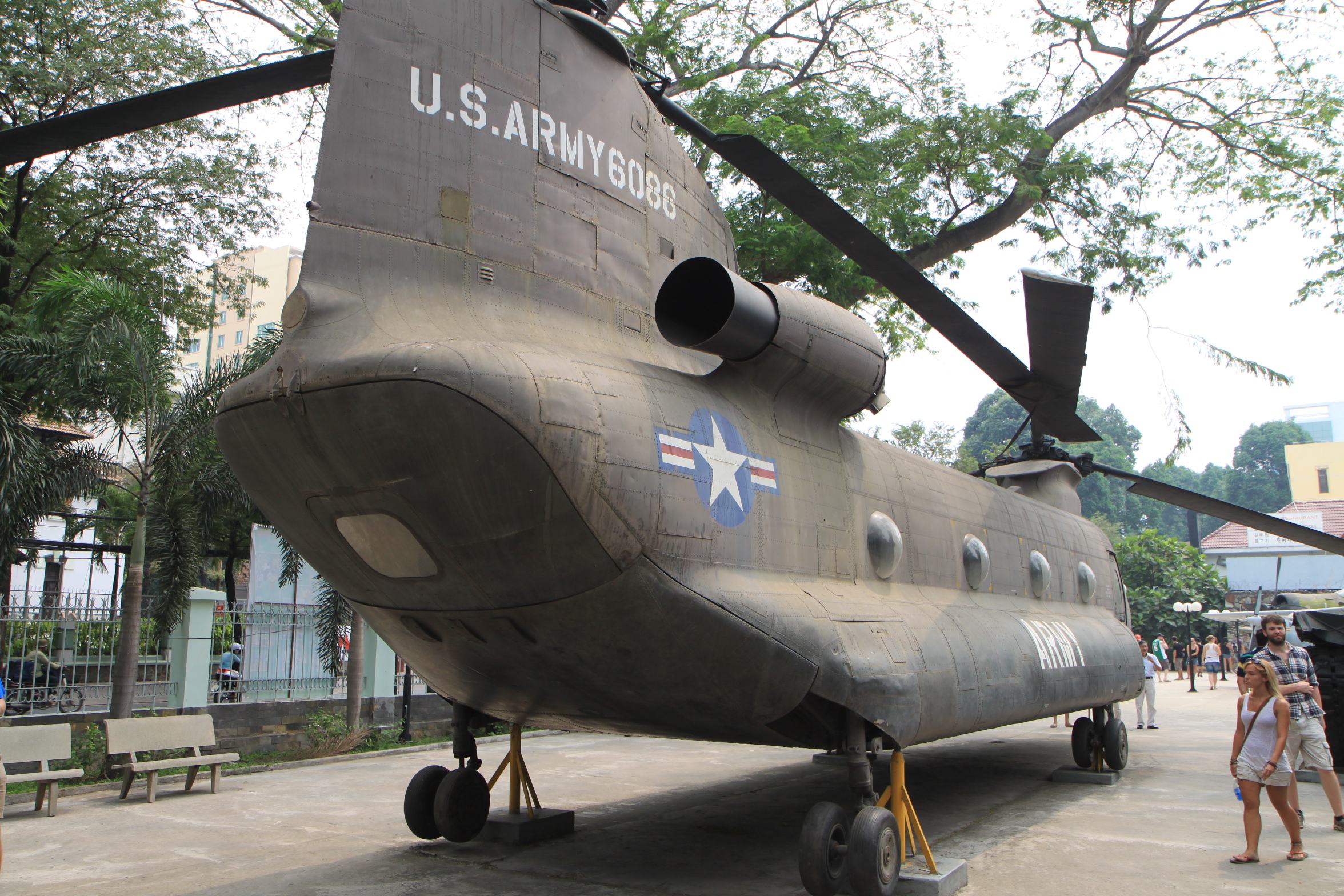
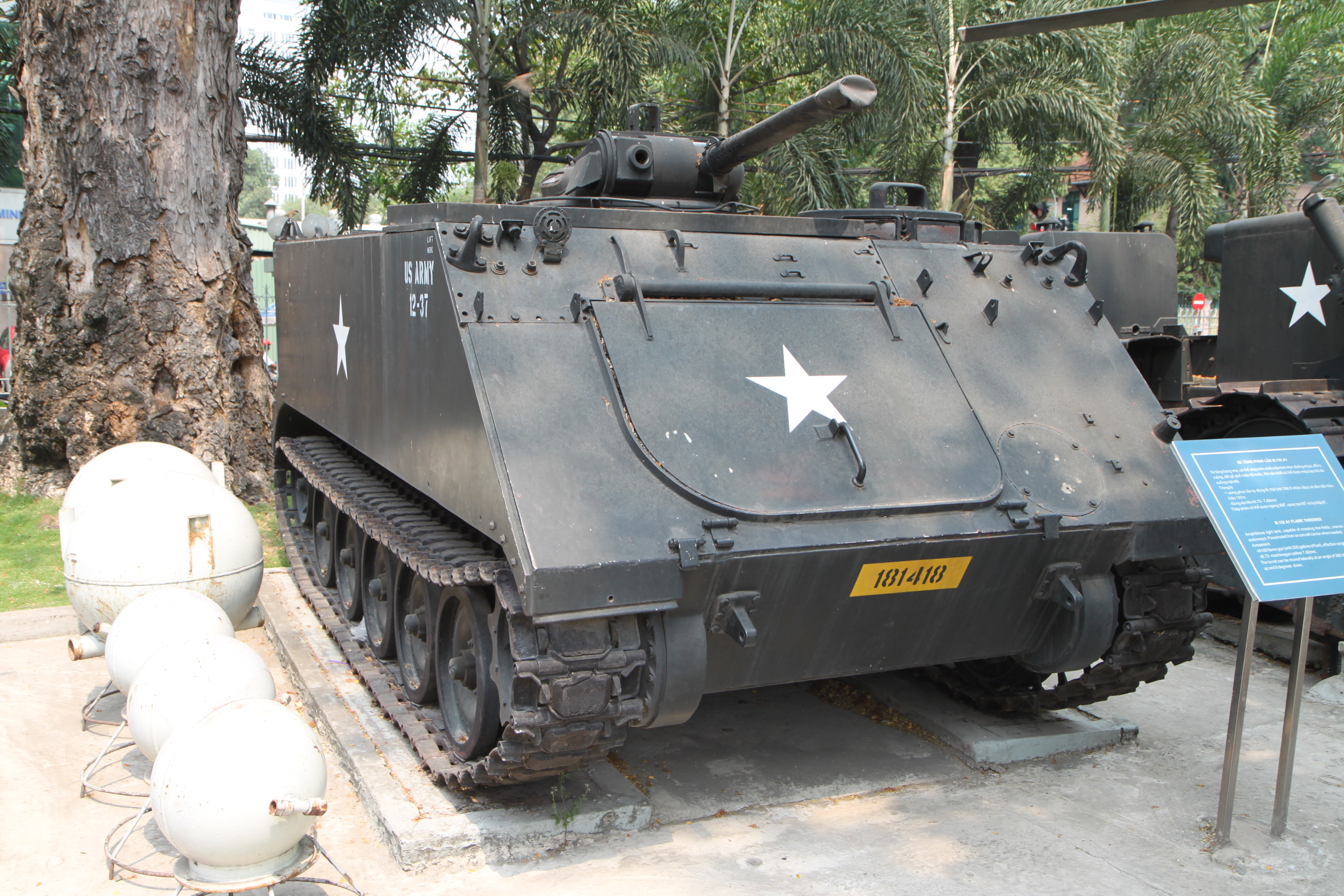
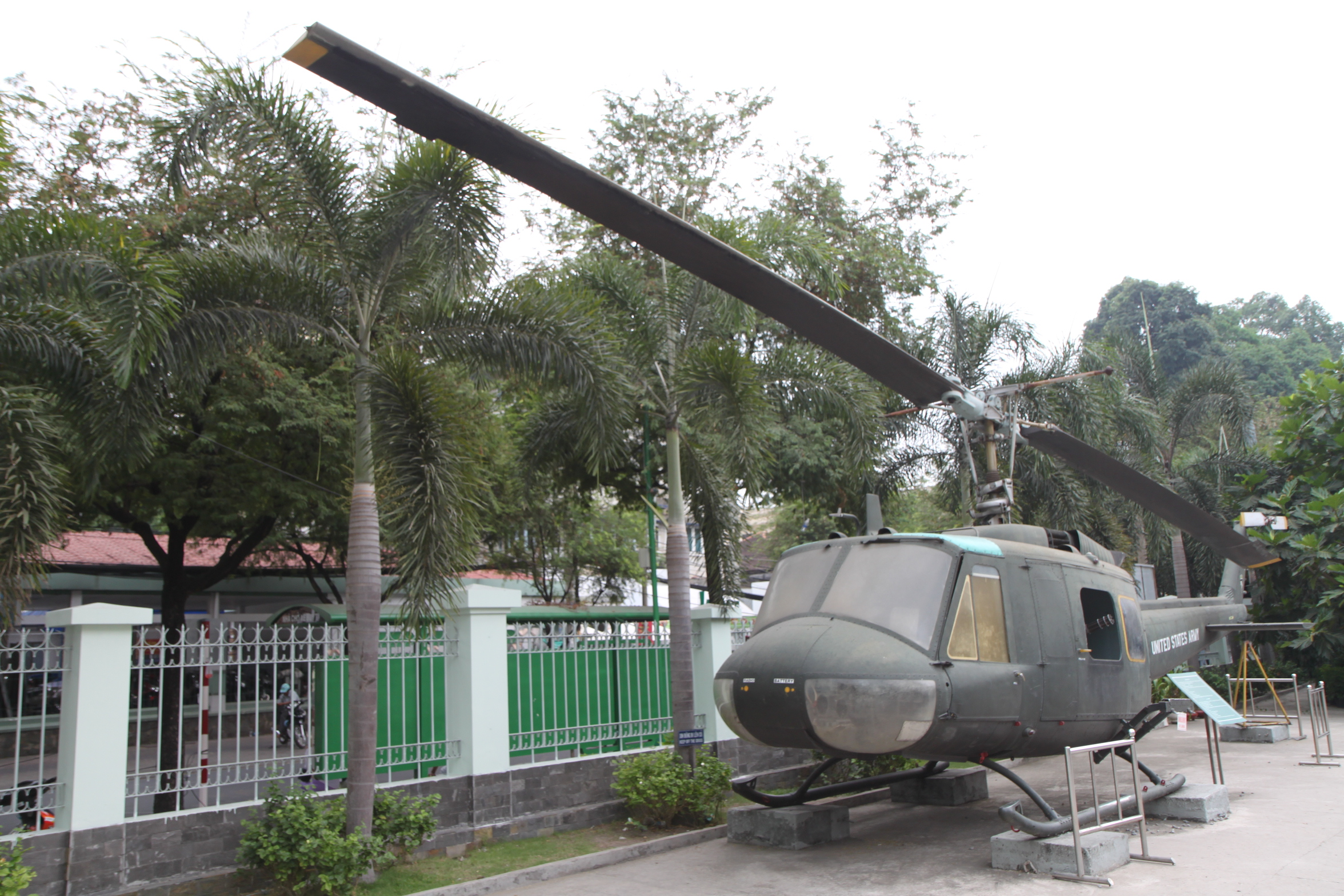
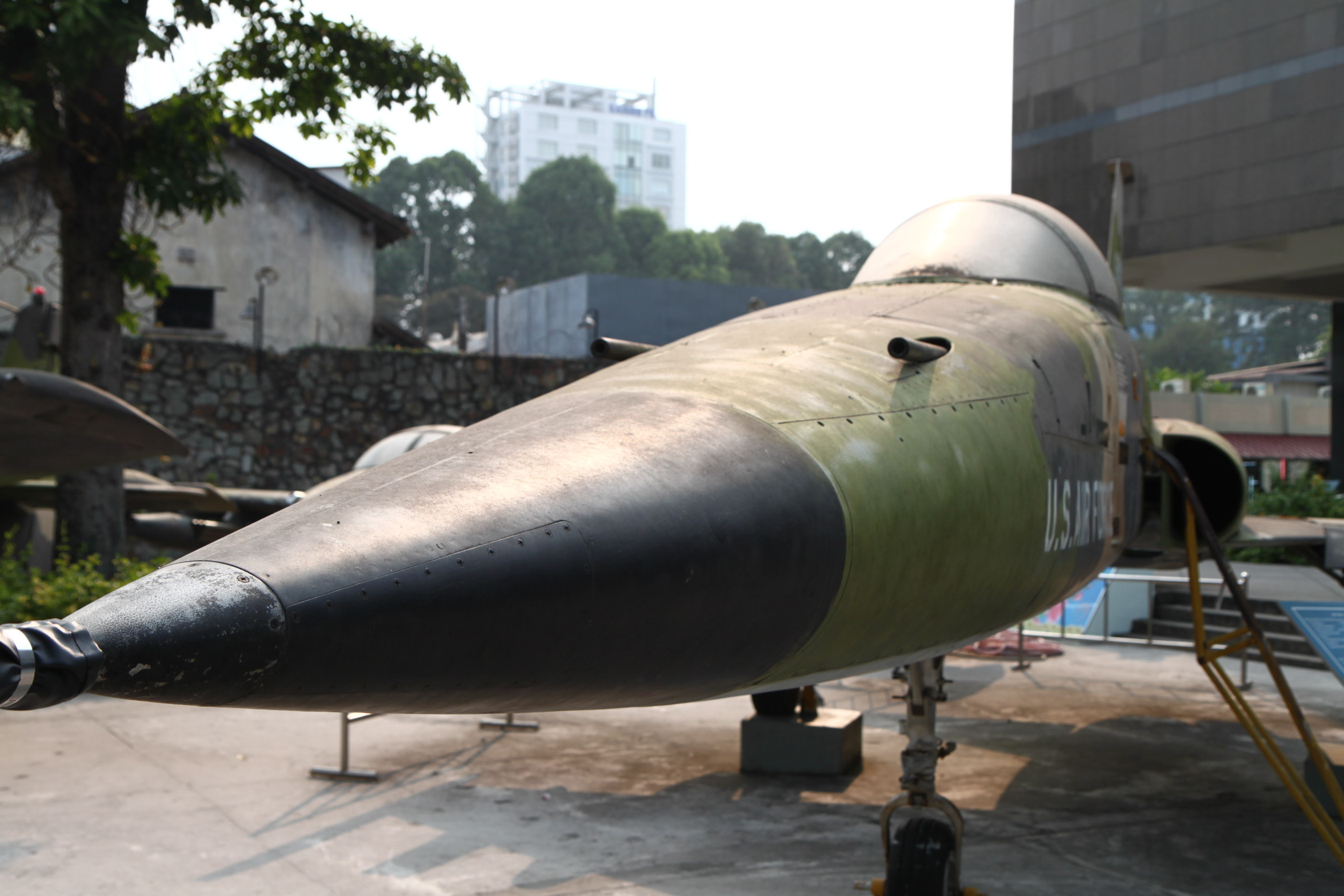
The yard at the front of the building houses old Wartime helicopters, fighter planes and tanks alongside what must can only be described as a bloody large gun!
The proper names are:
UH-1 ‘Huey’ helicopter – A-1 Skyraider attack bomber – F-5A fighter plane – M48 Patton tank – BLU-82 ‘Daisy Cutter’ bomb – A-37 Dragonfly attack bomber.
I spent a little time looking at all of the machinery and came to the conclusion that if they turned up at my village, in which the only buildings were made from grass, bamboo and palm leaves, i’d probably soil myself! Seriously thought, it makes you wonder what was going on when hundreds of men in tanks felt the need to drive into villages and fight the people when they couldn’t fight back with the same types of weapons.
Another interesting aspect of the museum was a display on the Con Dao island prison and others like it. According to the literature from Wikipedia: (yes i know it’s not the most reliable source…but it follows what the museum states…)
Côn Đảo Prison (Vietnamese: Nhà tù Côn Đảo), also Côn Sơn Prison, is a prison on Côn Sơn Island (also known as Côn Lôn) the largest island of the Côn Đảo archipelago in southern Vietnam (today it is in Bà Rịa–Vũng Tàu Province. The prison was built in 1861 by the French colonists to jail those considered especially dangerous to the colonial government. Many of the high-ranking leaders of Vietnam were detained here. It is ranked a special historical relic of national importance by the government of Vietnam.
(Wikipedia, 2020)
It was quite scary to think of what actually happened to the prisoners. There are three ‘tigers cage’ cells on show and they really did bring me out in a cold sweat: They are only just big enough for a human being to be put into. Part of the display has a mock-up of what the cells would have been like, one with a genuine prison door. I walked up to the door and looked through into the cell, not realizing that there was a waxwork figure in there…my god I nearly soiled myself!
The museum has a series of rooms with information on different topics and themes. The exhibits include photography, often extremely graphic, along with texts in English, Vietnamese and Japanese. The displays cover lots of topics from the effects of Agent Orange and other chemical defoliant sprays (basically they strip the vegetation from the trees and ground so that nothing grows and the people can’t hide in the foliage as there isn’t any there), the use of napalm and the use phosphorous bombs.
There is one room of photographs taken by photojournalists killed in the war, some of it is beyond words as you know that the people who took the photos were only trying to let the rest of the world know what was occurring. Some of the photos are pretty brutal, there was one with an American GI holding what remained of a Viet Cong soldier, it was literally just a head and some skin attached. I had to look away from some of the photos.
When I read about the museum in the travel guide it did say that the museum is very one-sided against the Americans. The museum does show a lot of propagandist images and texts, but I think that anyone visiting would hopefully have done their own research into the war and what went on before going and taking it as gospel.
Overall I would say that it was a very informative, albeit gory and brutal, museum that tells one side of the war.




 Powered By Fondant Fancy