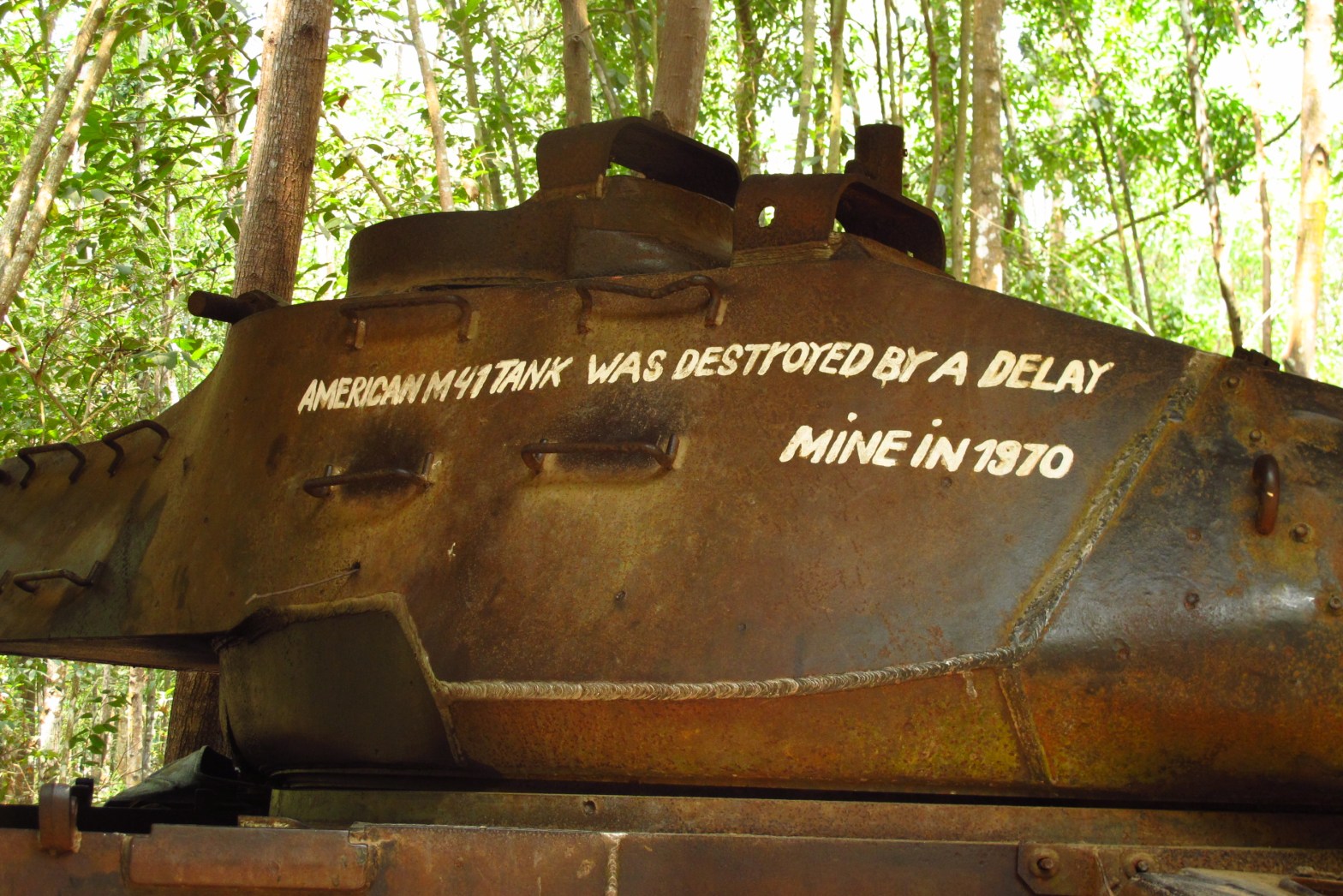
The tunnels at Cu Chi are an amazing network of connecting underground tunnels that were used during the Vietnam War. They were made by the Viet Cong and were their main base of operations during the Tet Offensive in 1968 and up until the end of the war.
The tunnels were used by the Viet Cong guerrilla soldiers as hiding spots as well as supply routes and and had hospitals, kitchens and living quarters contained inside. The tunnel systems were very important to the Viet Cong in their resistance to the American troops.
Apparently the American soldiers used the term ‘Black Echo’ to describe to conditions within the tunnels, but even for the Viet Cong life was incredibly difficult within them. There would be very little air in the tunnels, even though air vents were factored into their creation, food and water would have been hard to come by and the tunnels themselves would have been infested with a wide variety of creepy crawlies: ants, poisonous centipedes, scorpions and spiders to name but a few.
Most of the daytime was spent inside the tunnels and the night would be spent scavenging for food or tending to the rice paddies. Sometimes, when the bombing was particularly heavy, they would have to stay underground for many days at a time.
With all of the soldiers in such close proximity of each other underground there was a lot of illness. Malaria killed nearly as many people as battle wounds and most, if not all, of the soldiers had intestinal parasites! It sounds like a really horrific place to be…
Despite the horrors, the tunnels did play a major role in the Vietnamese winning the war.
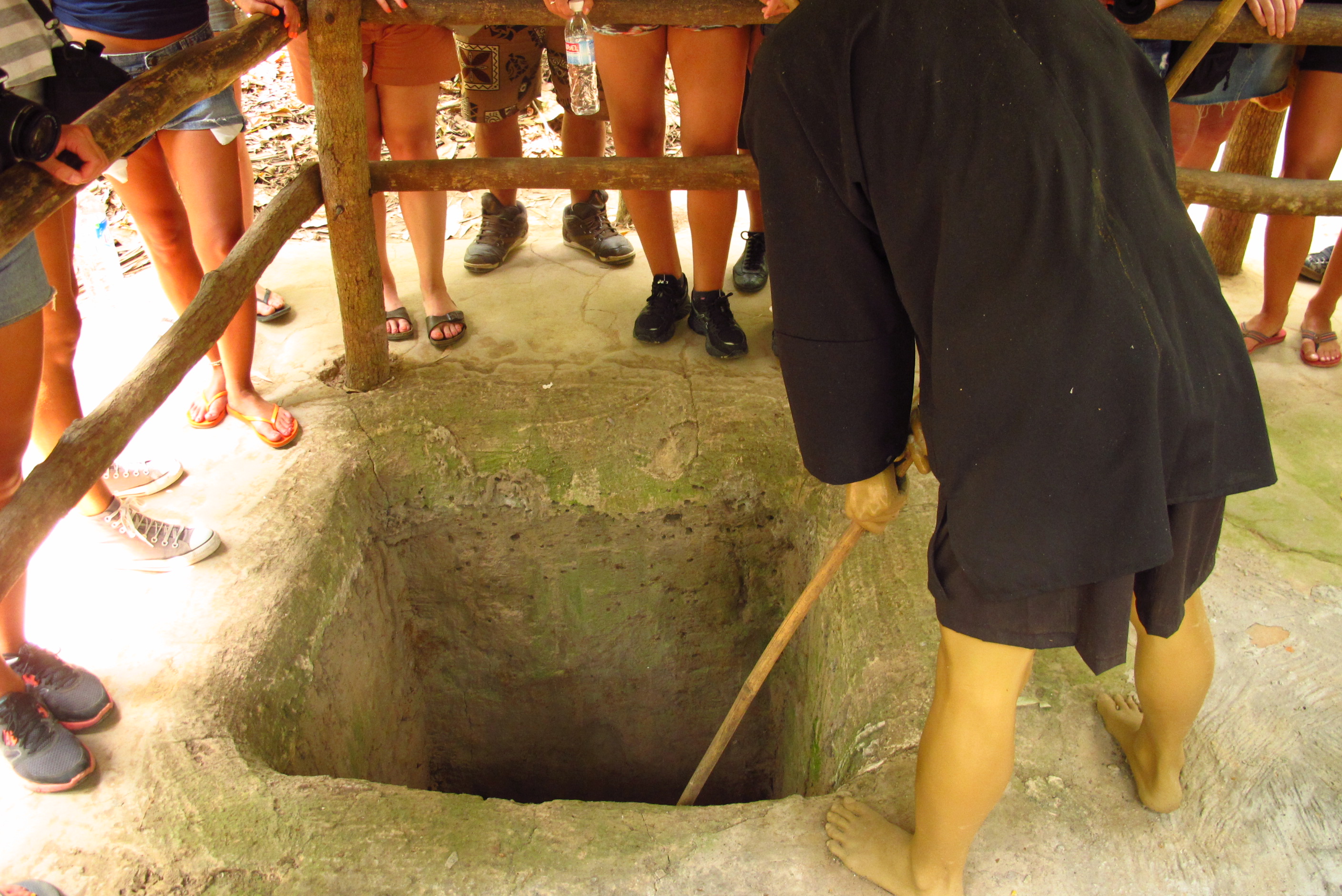
Whilst looking around the tunnels I got to see different kinds of traps that were used against the Americans, some of them were brilliant. Brutal, but brilliant! Most of the traps were adapted from animal traps, just made bigger. They would have all been heavily disguised and the soldiers would not have known they were falling into a trap until it was too late. Here are some of the traps:
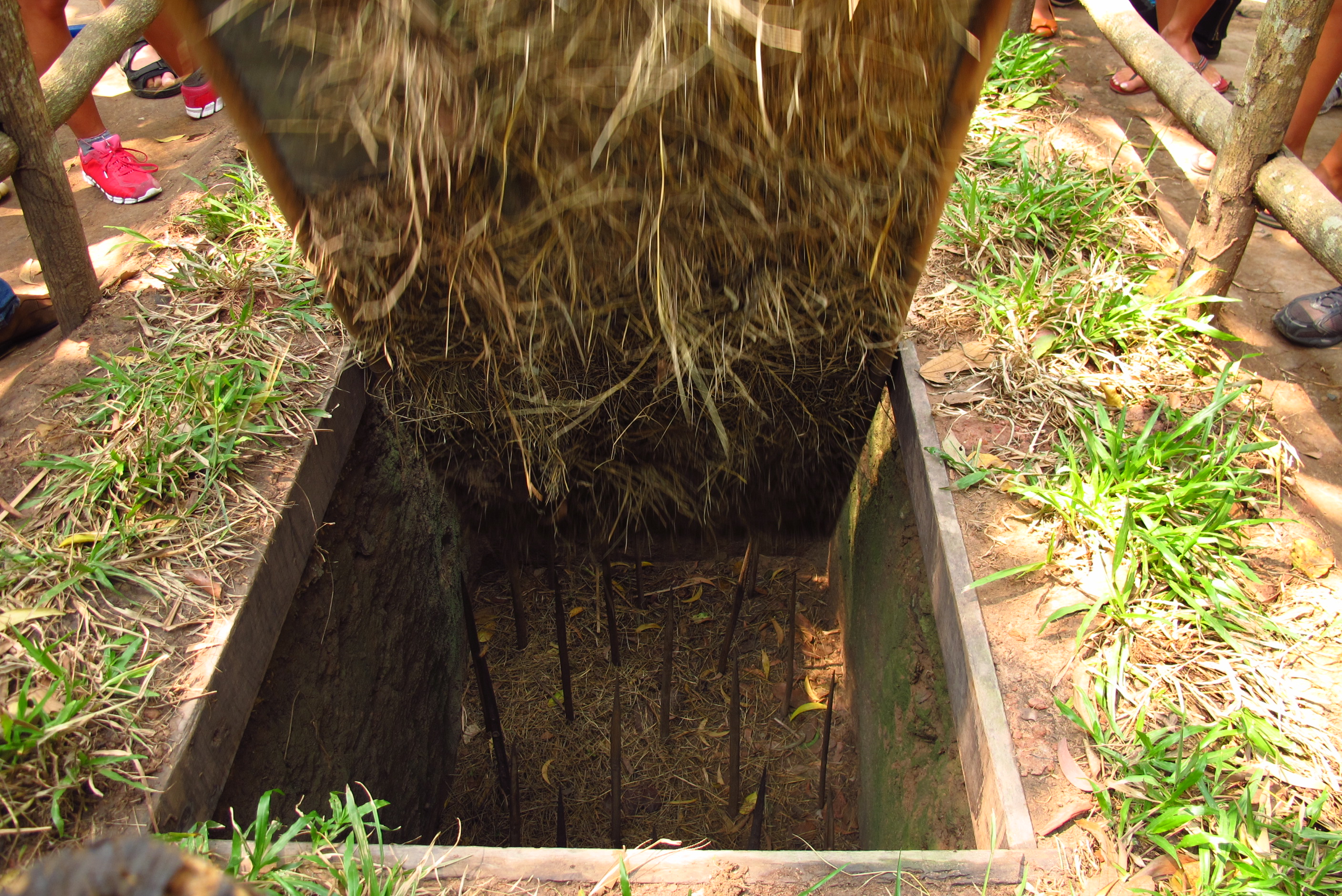
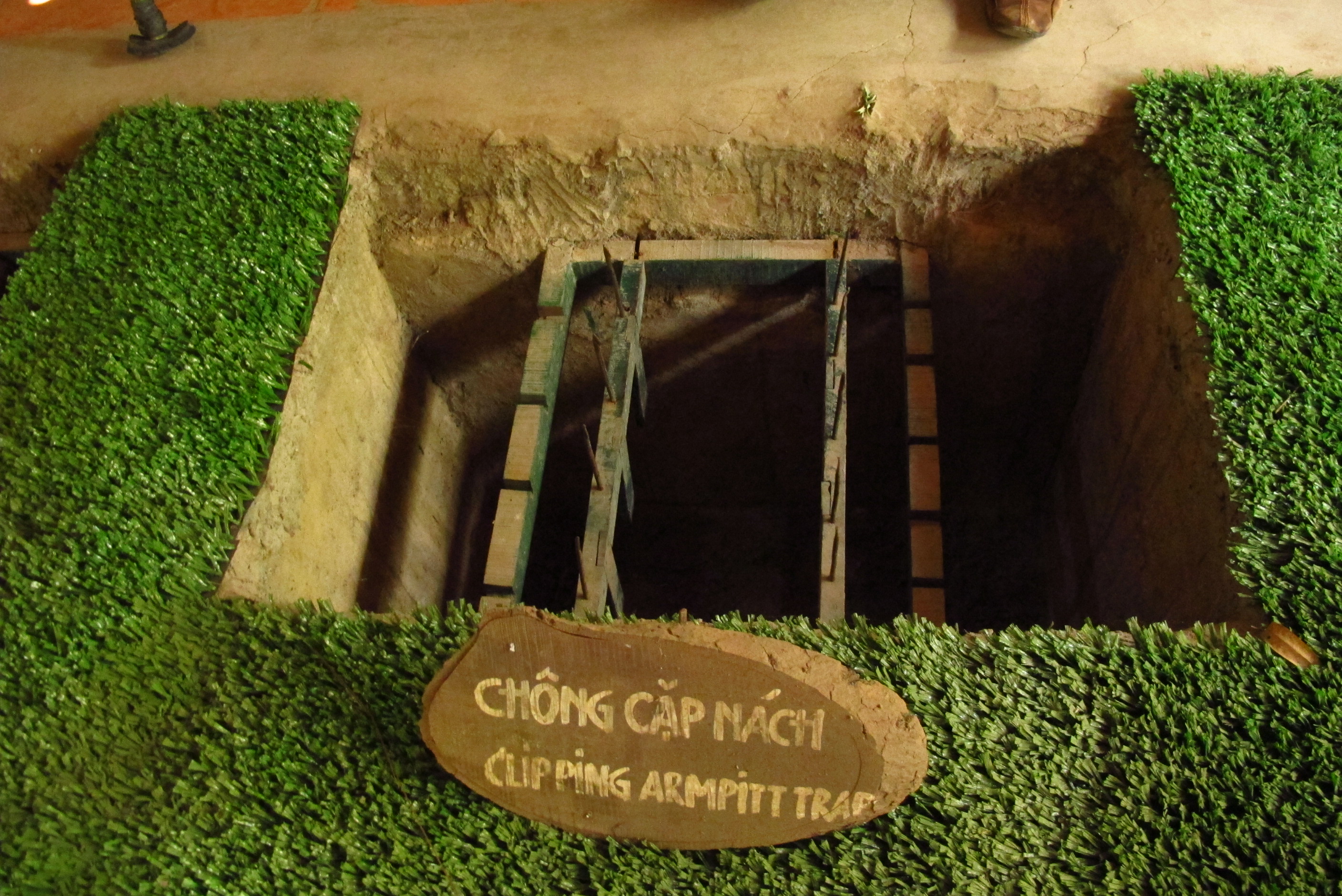
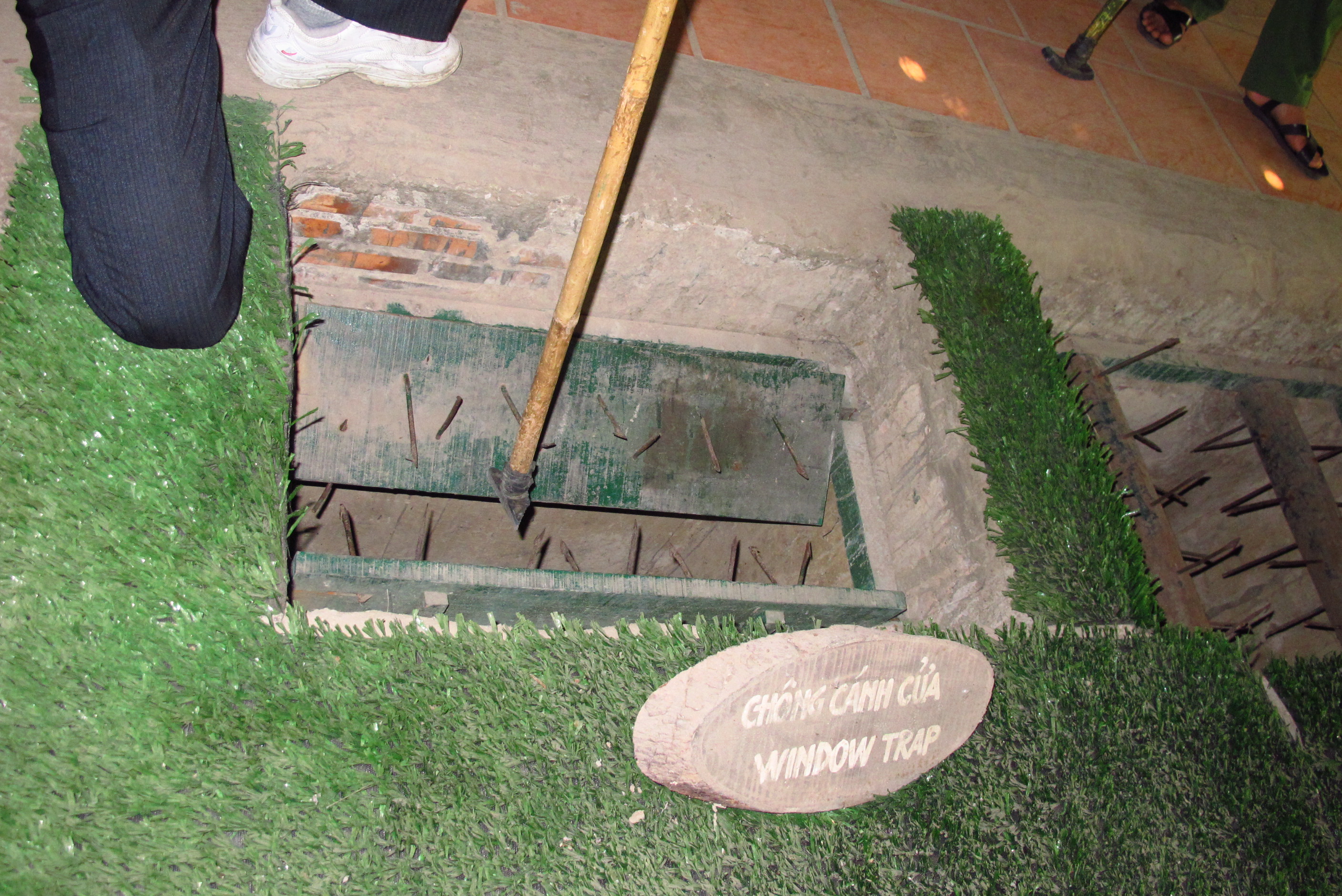
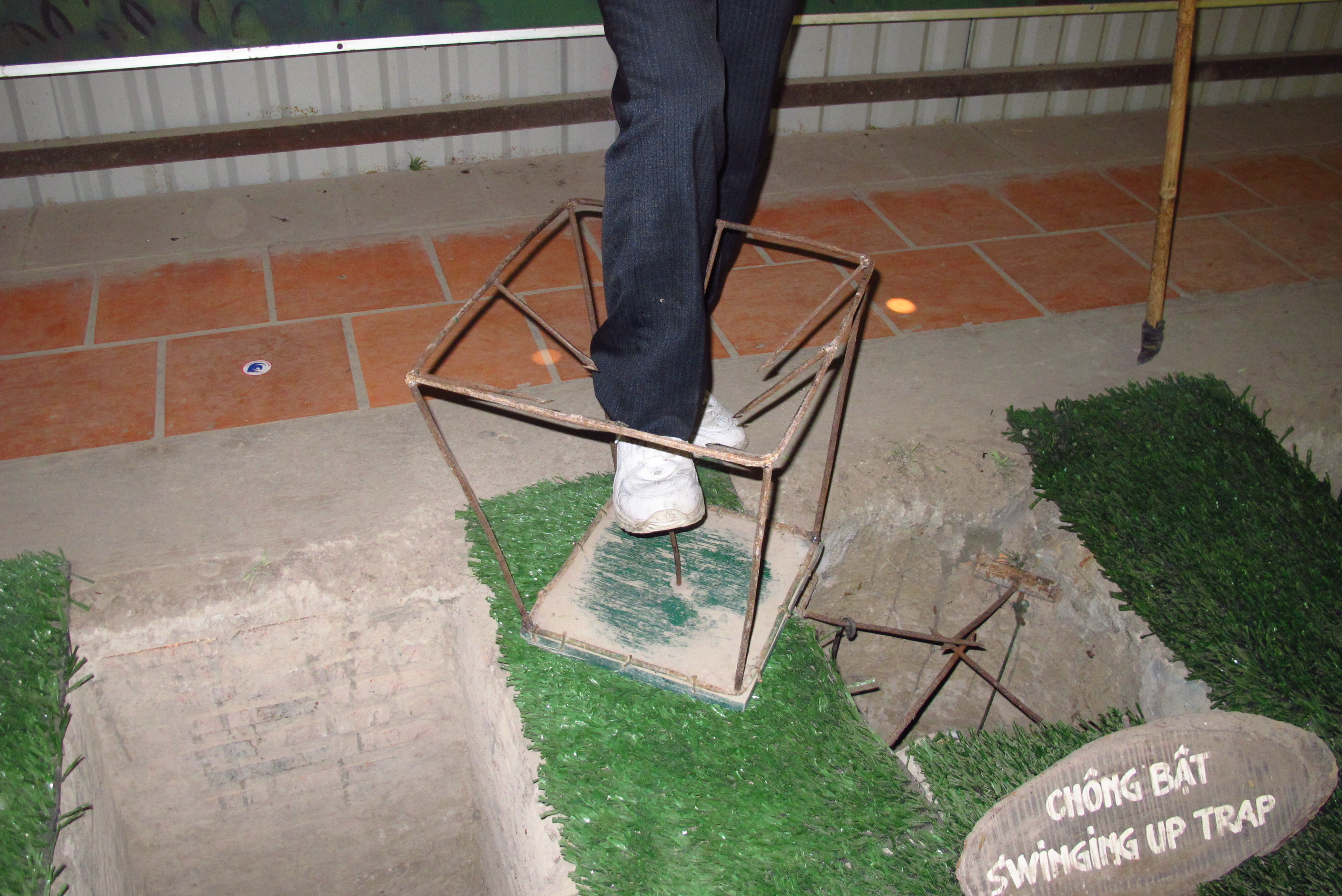
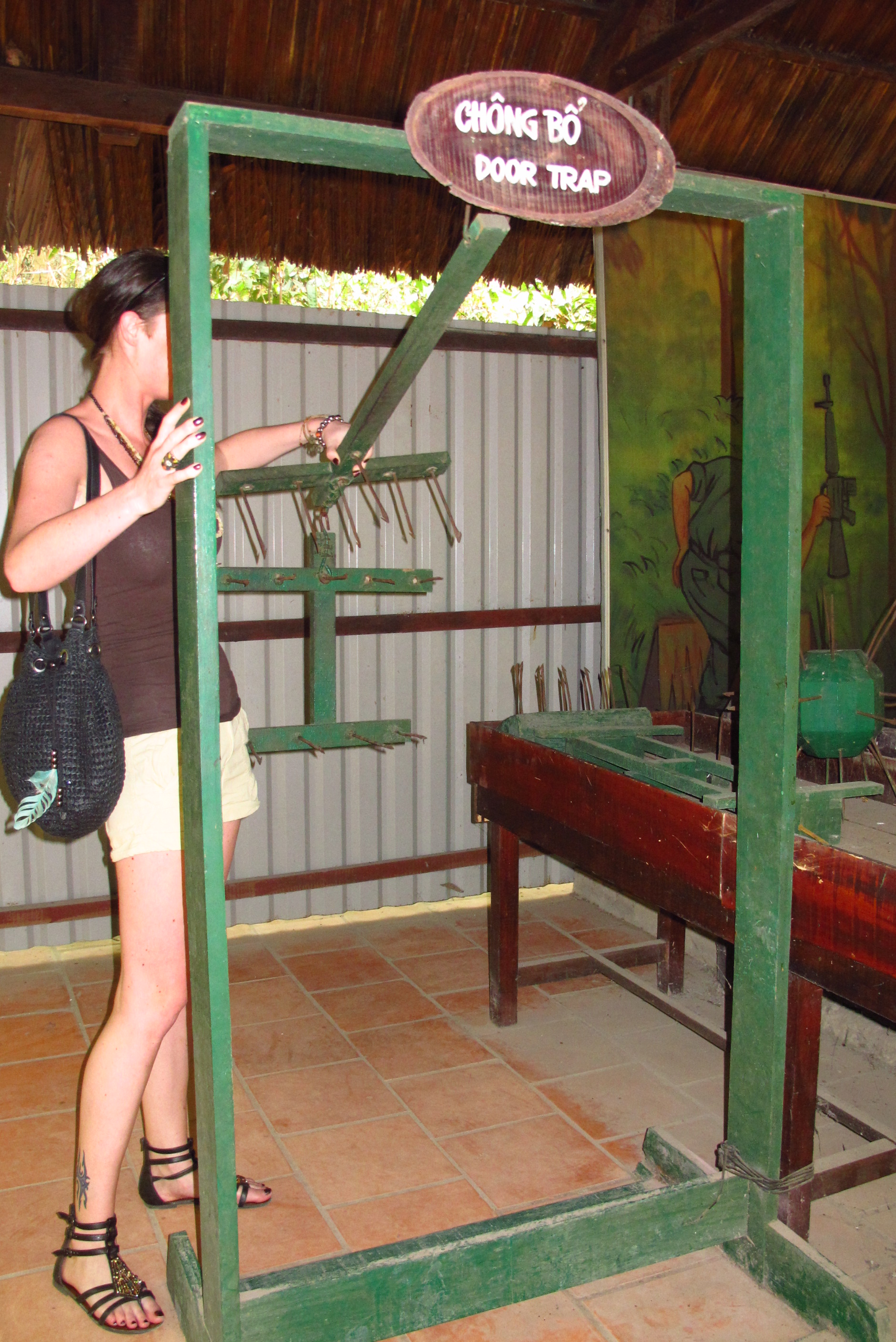
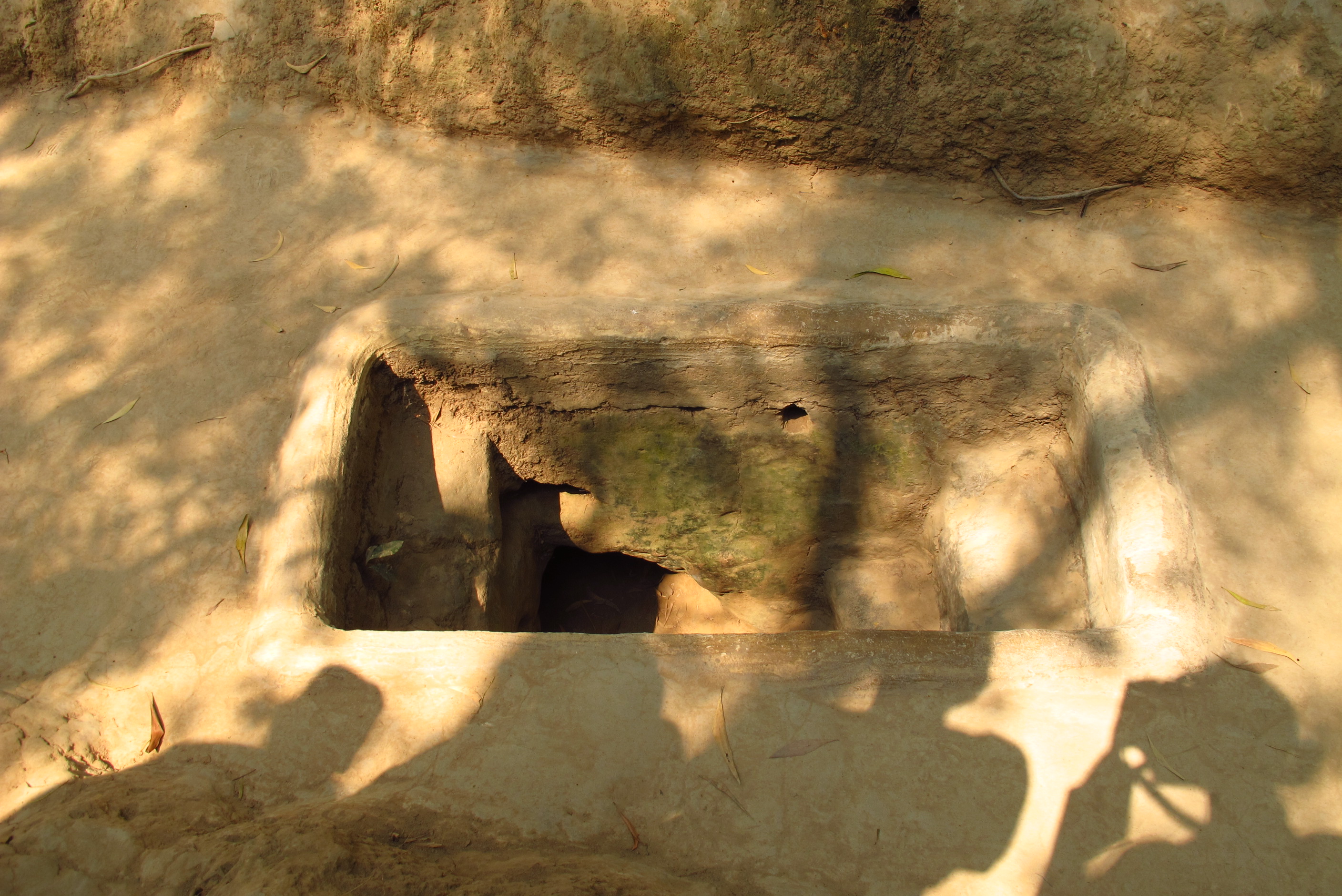
The Americans tried many times to search out and destroy the tunnels. The Viet Cong soldiers had made decoy tunnels and on the occasion that the GI’s found one they would often not send anyone down to search it due to the tunnels being so hazardous: They were often booby trapped with explosives or stake pits.
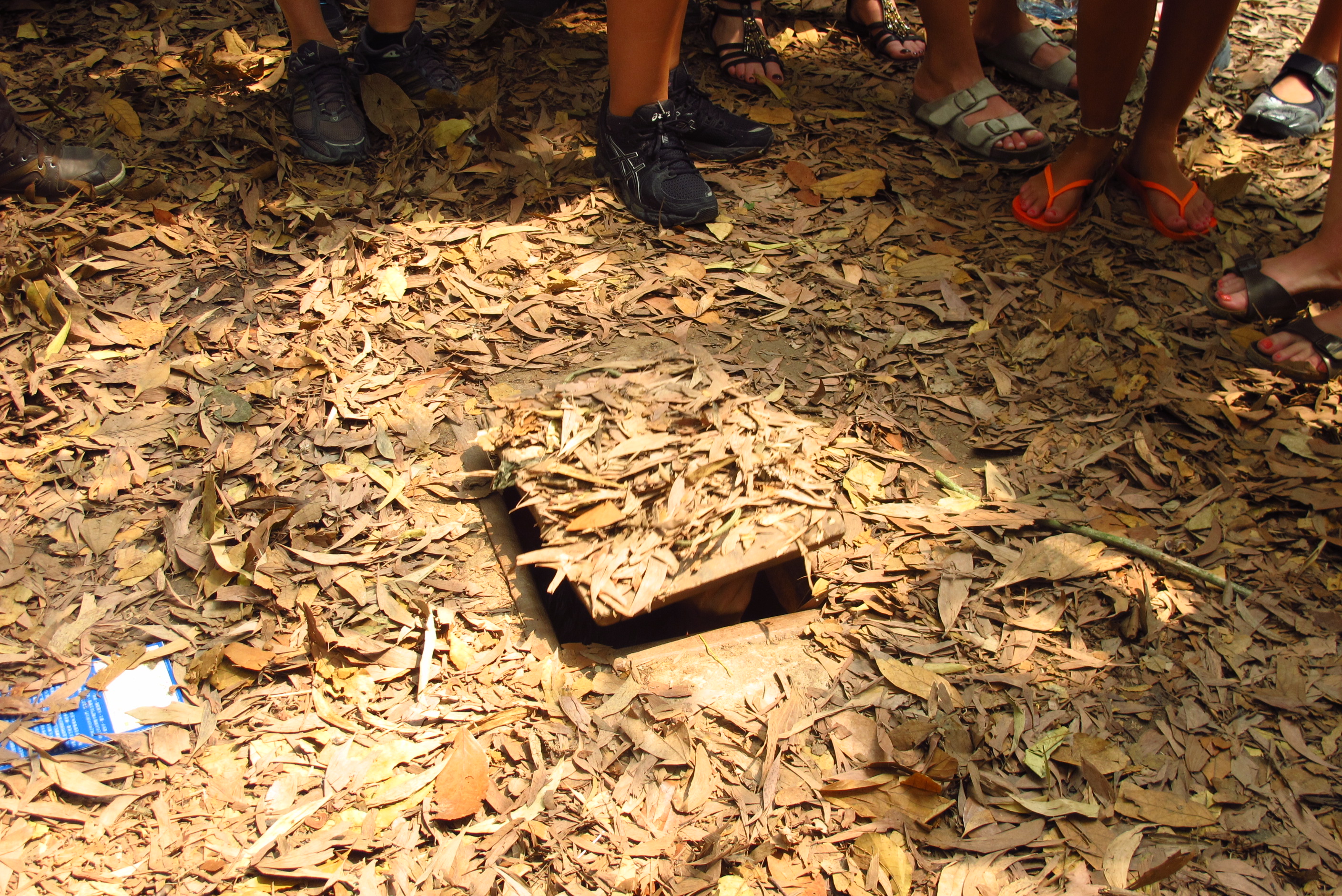
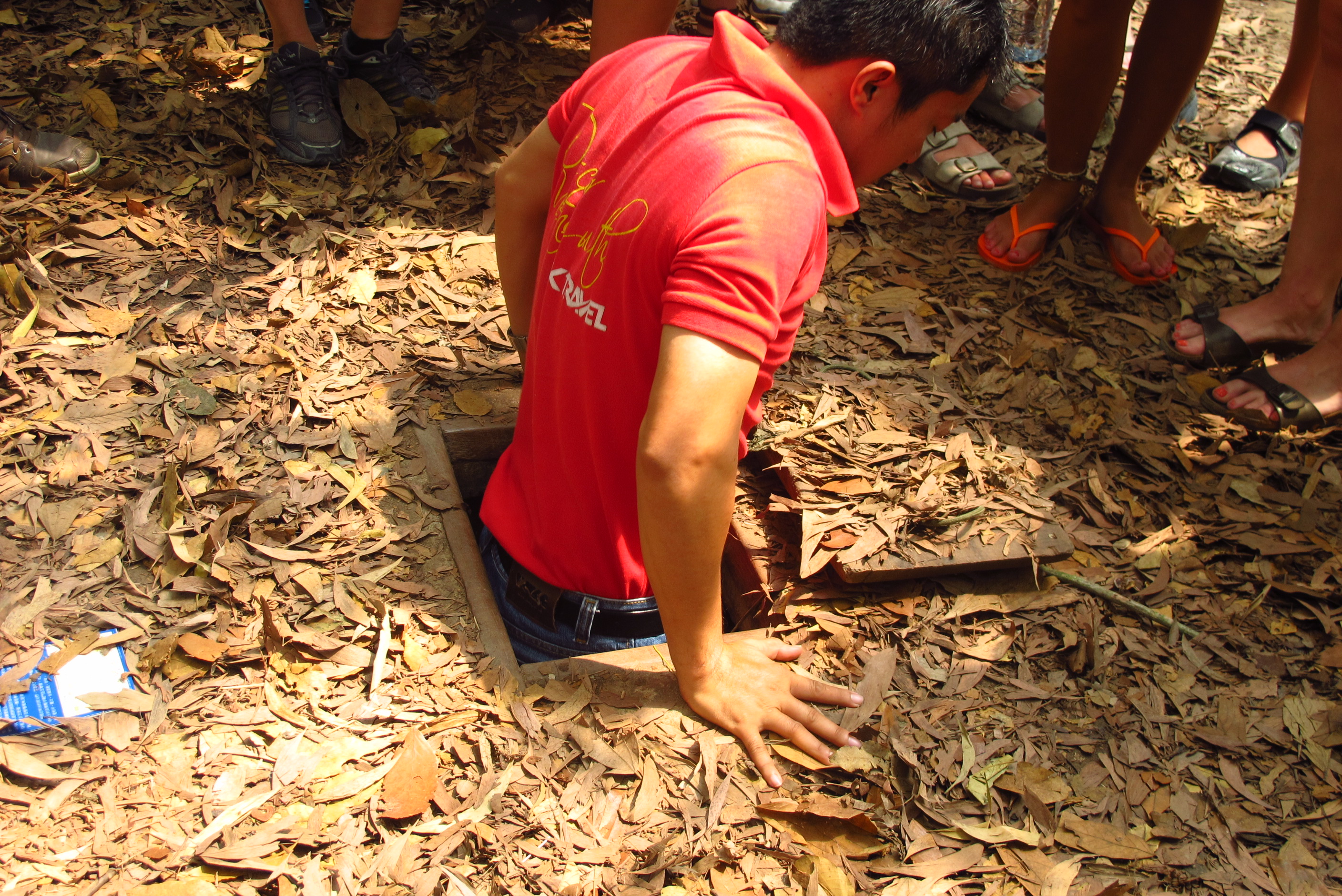
When the Americans found a tunnel they would usually flush out the entrance with hot tar or gas water in order to send the Viet Cong soldiers out into the open. Another widely used method was to throw a grenade into the opening and have it cave in on itself; however, most of their methods didn’t really work because the tunnels were very well designed in order to keep the people inside them alive! There were air vents and clever traps doors that basically rendered any attempts ineffective.
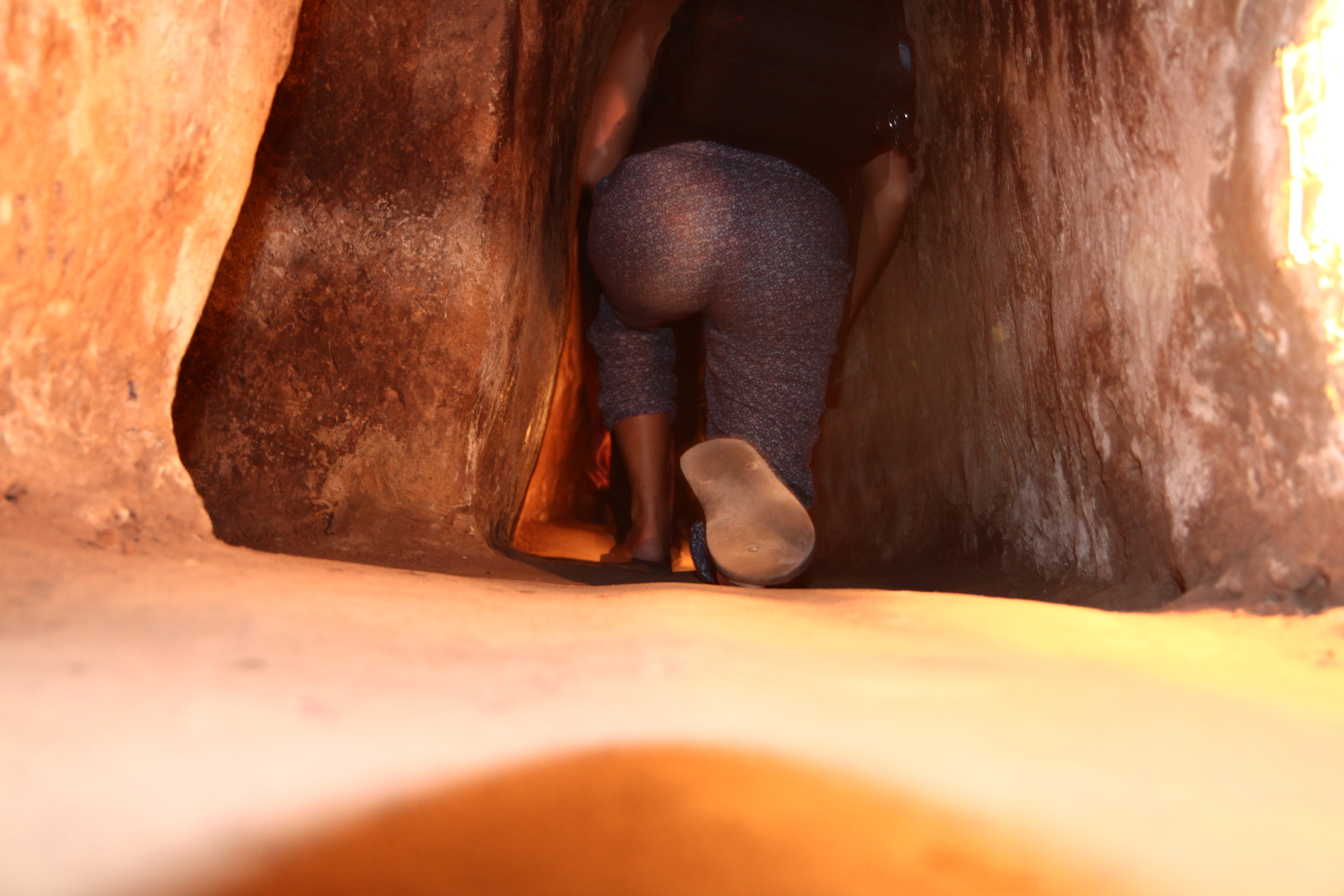
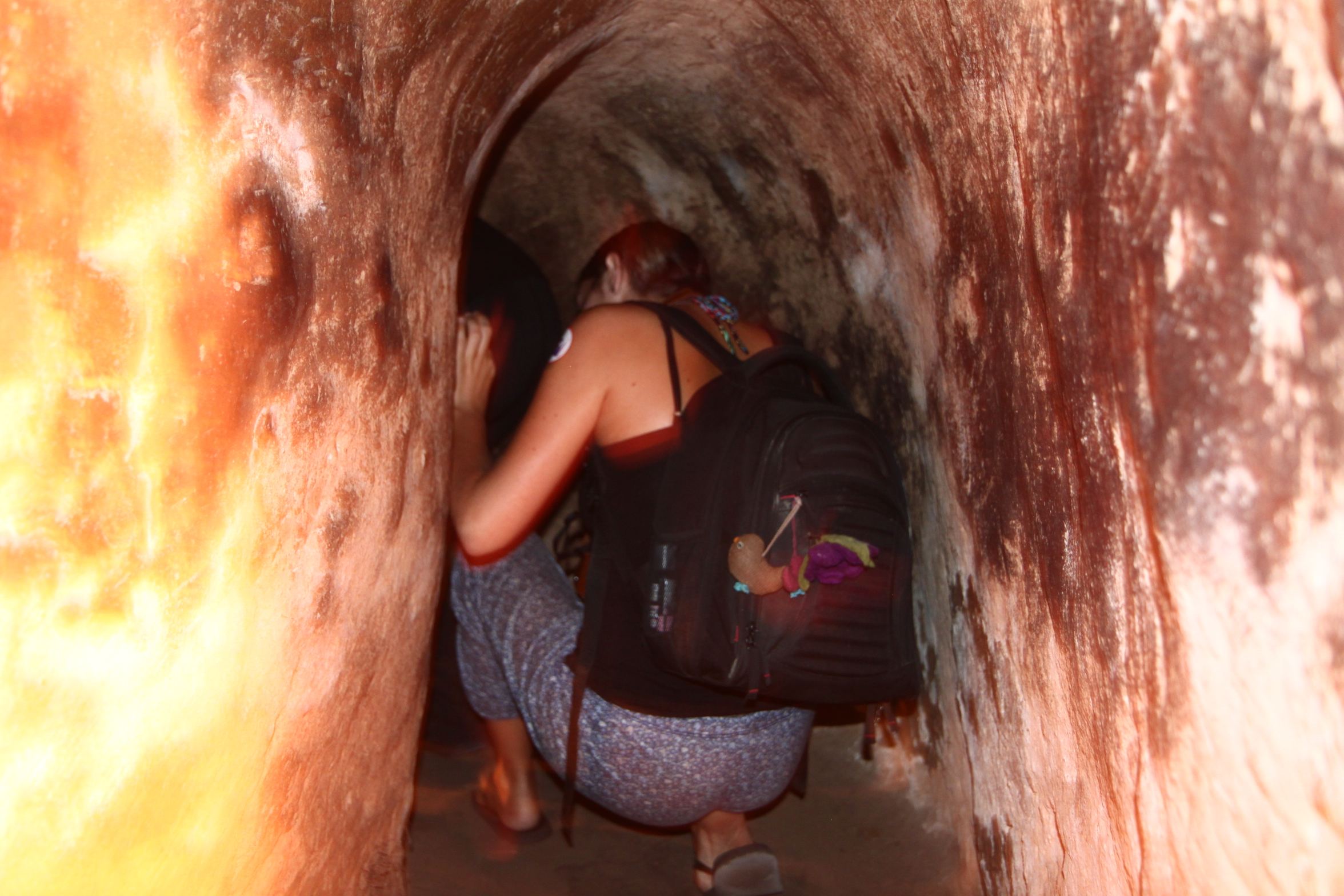
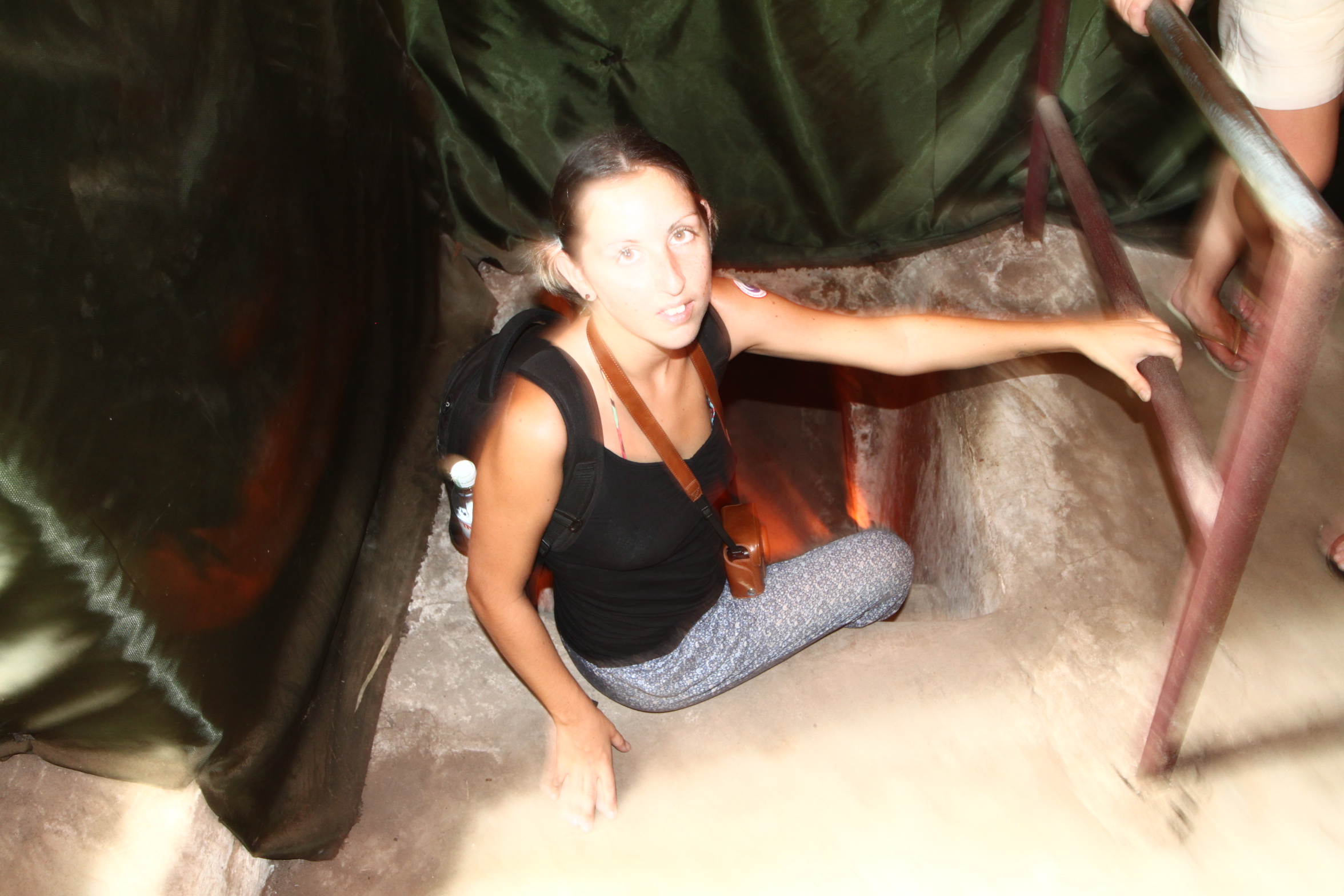
I did eventually get to go inside some of the tunnels and am very glad that I don’t have to do it on a regular basis! The first few minutes were fine, but as I went in deeper and the light was getting less and less, I began to get a little panicked. There is just enough space to get into a sort of squatting walk and shuffle along like this for a little time…then my legs started to hurt so I crawled on my hands and knees. After a little while (which was probably only a few minutes) I passed a route off to the left, this is where I was beginning to worry. I knew that I was following a guide and that we were going a designated route, but I still had the following going round my head:
– What if we’ve gone the wrong way?
– OMG, it’s really dark…I can’t see anything
– It’s really quite small down here
– I can’t go backwards
– I can’t turn around
– What if we get stuck
– It’s really hot!!!
After what felt like AGES of shuffling around, the girl in front of me told her friends that she was getting out…I then realised that the routes off to the left and right were in fact there for the tourists so that we could get out and not feel claustrophobic…duh! Once out I was literally SO glad that I didn’t have to back down, I was shaking and sweating and was breathless.

 Powered By Fondant Fancy